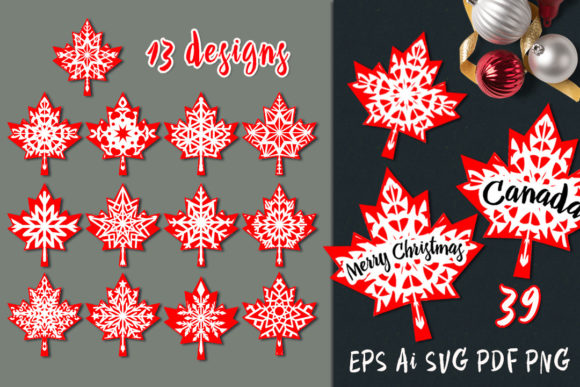
Evaluating the Christmas Maple Leaf Embroidery Design
When you open an embroidery file, you’re not just looking at stitches; you’re looking at a potential product, a gift, or a piece of your brand. The Christmas Maple Leaf design presents itself immediately as a confident, festive graphic. Its clean, wedge-shaped form is more symbolic than realistic, leaning into decoration rather than botanical accuracy. This is a smart choice. It creates a bold, recognizable shape that will translate beautifully into satin stitches and clean fills, carrying a mood of cheerful, modern holiday spirit with a touch of rustic charm.
The First Impression: Where This Design Naturally Belongs
My first thought was of a custom, holiday-themed tote bag for a boutique. The design’s strength is its graphic simplicity. It doesn’t scream “Christmas” with overt symbols like snowflakes or Santa, but through the elegant combination of a classic maple leaf form and the implied festive color—red. This gives it a versatile, slightly sophisticated holiday vibe. It feels perfect for adult gifts, home decor items, or branded merchandise for a small shop. Imagine it stitched onto a natural linen apron for a cozy kitchen aesthetic, or as a repeating pattern on the hem of a cotton pillow cover. It’s a decorative element that enhances rather than overwhelms a product.
A Real-World Scenario: Embroidering a Holiday Sweatshirt
Let’s walk through a practical scenario. I’m considering using the Christmas Maple Leaf for a limited-run holiday sweatshirt for my small business. The design being a set of leaves is a key advantage. I can create a clustered grouping on the front for a statement piece, or use a single, smaller leaf on the sleeve for a subtle accent. The graphic nature means that even at a reduced size for a cap or a baby bib, the main shape will remain clear—there are no tiny, intricate details that might vanish in smaller hoop sizes.
On a navy or charcoal sweatshirt, a red thread rendition would pop beautifully, creating that classic Christmas color contrast without being childish. On a white or cream base, it would feel crisp and clean. This flexibility is crucial for product development. I can envision a whole line: sweatshirts, tea towels, and maybe even a simple patch that customers could iron onto their own items. The design supports brand consistency across different products.
Performance on Actual Products: Where It Shines and Where to Be Careful
For machine embroidery, this design should perform reliably on standard applications. On sturdy fabrics like canvas tote bags, denim, or quilt-weight cotton, the likely fill stitches will look solid and professional. On apparel like t-shirts and sweatshirts, using the correct stabilizer is paramount to prevent puckering, especially given that a leaf shape can have concentrated stitch density in its wider areas. A test run on scrap fabric of the same type is non-negotiable here—it allows you to check thread tension and see how the red wedge translates physically.
There are, however, situations that demand more caution. The points and corners of the leaf wedges could be potential trouble spots on very textured or loosely woven fabrics, like some blankets, where stitch definition might soften. On extremely stretchy fabrics without rigorous stabilization, the design could distort. Also, for products destined for frequent washing, like kitchen towels or baby items, you’d want to ensure the stitch density isn’t so high that it creates a stiff, uncomfortable plaque on the fabric. This is less about the design itself and more about the savvy application of your embroidery skills.
Visual Appeal and Commercial Value
From a customer’s perspective, a well-embroidered Christmas Maple Leaf elevates a product. It reads as intentionally handmade or custom-made, not generic. For an Etsy seller or a craft fair vendor, that authenticity builds trust. On a personalized gift, like an embroidered wool blanket for a wedding gift for a couple who loves Canada, it adds a thoughtful, unique layer. The design is recognizably holiday and recognizably maple, which can engage buyers looking for something specific but not overtly kitschy.
For commercial embroidery projects or for sellers of the digital embroidery file itself, its clarity in mockups is important. Since the product description mentions it's a set, creating printable mockups for a catalog or website showing the leaves arranged in different patterns would demonstrate its utility effectively. The design feels like a solid design asset for anyone building a collection of holiday-themed graphics.
Practical Notes for the Embroidery Designer
Before you commit this design to a final product, here’s my practical checklist. First, test the design on both light and dark scrap fabric. The color contrast of red thread on a dark background is different than on a light one; you might find a slight shift in thread shade makes a big impact. Second, inspect the file carefully in your software. Look at the stitch structure for any unusually dense fill areas that might need adjustment for your specific fabric. Since exact hoop sizes aren’t specified, you’ll need to confirm the design dimensions fit your intended hoop—whether it’s for a 4x4 cap hoop or a larger 8x10 for a pillow.
Third, consider its use for both personal and commercial projects. The description doesn’t outline licensing, so it is your responsibility to confirm the licensing terms before selling finished items or using it in client work. This is a fundamental step for any professional or small business owner. Finally, think about presentation. On a delicate item like a silk scarf (if stabilized impeccably), it could be a stunning accent. On a robust canvas apron, it becomes a durable decorative feature. Matching the design’s personality to the product’s purpose is key.
A Final Thought on Giftability and Branding
The Christmas Maple Leaf design, in the end, is a versatile graphic tool. Its success in your project won’t just be about the embroidery file itself, but about your thoughtful application. It has the potential to make a holiday sweatshirt feel special, a tote bag feel festive, and a simple kitchen towel feel like a worthy gift. For makers and creative entrepreneurs, that’s the core of value: a design that supports your vision and results in a finished product that feels cohesive, professional, and genuinely delightful. Stitch it with confidence, but always stitch it with preparation.